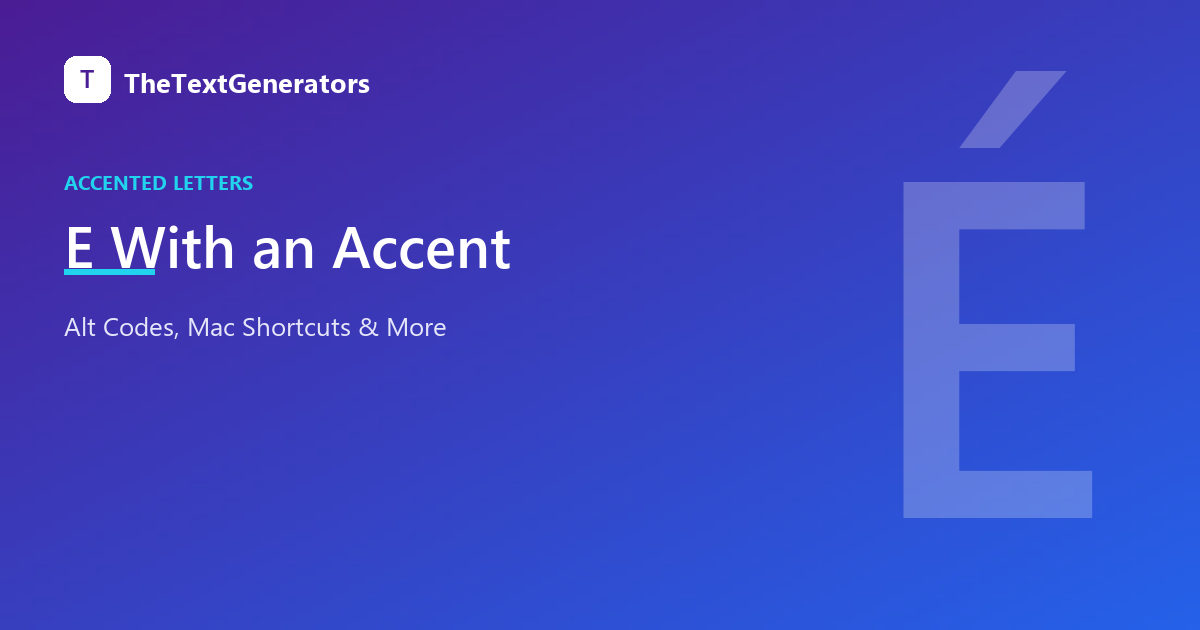

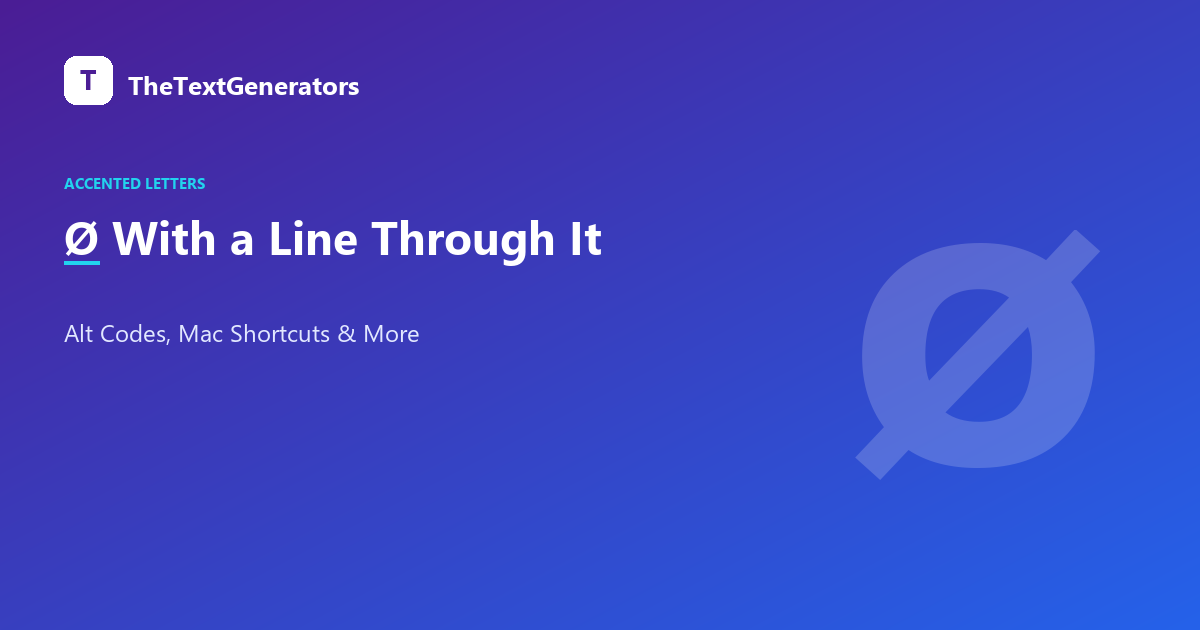
O With a Line Through It (Ø)

The letter O with a line through it - Ø, the Danish and Norwegian letter, shown large against a purple to blue gradient

O With a Line Through It (Ø) The letter people are picturing when they search “o with a line through it” is almost always Ø (capital) or ø (lowercase) — a real Unicode letter, not a stylized O. It copies and pastes exactly like plain text, and it’s the letter used in Danish, Norwegian and … Read more
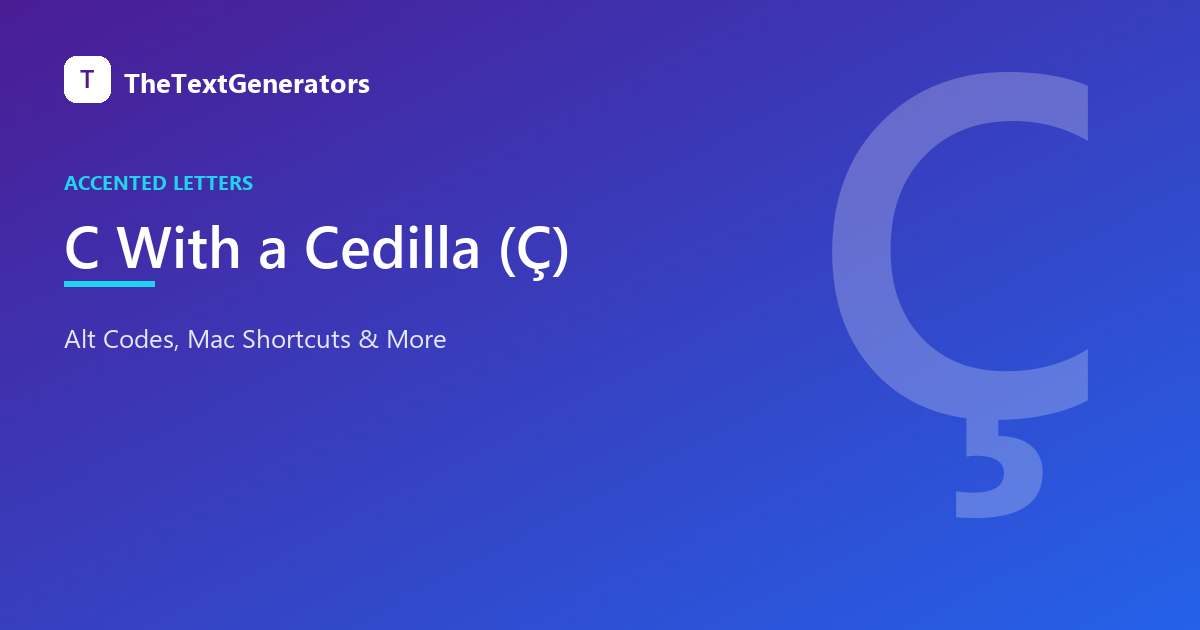

C With an Accent (Ç) Explained

C With an Accent (Ç) C has one common accented form: ç, called “c with a cedilla.” It’s a genuine Unicode character, not a stylized c, and copies and pastes exactly like plain text. What the Cedilla Actually Does In French, Portuguese, Turkish, Catalan and a handful of other languages, plain c before a, o, … Read more

I With an Accent — Í, Ì, Î, Ï Explained

I With an Accent I appears with four accents in common use: í (acute), ì (grave), î (circumflex), and ï (umlaut/diaeresis). Each is a genuine Unicode character, so it copies and pastes exactly like plain text once you have the right one. í acute — Spanish, Portuguese, Czech and Icelandic ì grave — Italian (rare) … Read more

N With an Accent (Ñ) Explained

N With an Accent (Ñ) Unlike most accented letters, N really only has one common accented form: ñ (n with a tilde), sometimes called “n with a squiggle” or, in Spanish, “eñe.” It’s a genuine Unicode character, not a stylized n, and it copies and pastes exactly like plain text. Ñ Isn’t Really “N With … Read more

U With an Accent — Ú, Ù, Û, Ü Explained

U With an Accent U appears with four accents in common use: ú (acute), ù (grave), û (circumflex), and ü (umlaut/diaeresis). All four are genuine Unicode characters, so they behave exactly like any other letter once copied. ú acute — Spanish and Portuguese ù grave — French and Italian û circumflex — French ü umlaut … Read more

O With an Accent — Ó, Ò, Ô, Ö, Õ Explained

O With an Accent O appears with five accents in everyday use: ó (acute), ò (grave), ô (circumflex), ö (umlaut/diaeresis), and õ (tilde). All five are real Unicode characters, not stylized fonts, so they copy and paste like ordinary text. ó acute — Spanish, Portuguese, Polish and Hungarian ò grave — Italian and Catalan ô … Read more

Where Does Fancy Text Actually Work? The Real Platform Compatibility Test

TL;DR Almost every platform splits into two zones: your @username/handle (plain ASCII only, everywhere) and your display name, bio, or posts (Unicode fancy text usually works fine). Two real exceptions break that pattern: LinkedIn actively blocks styled Unicode in the Headline field, and Facebook actively rejects Unicode in the profile Name field — both due … Read more

Social Media Character Limits 2026: Every Platform, One Page

TL;DR Every major platform’s real bio, post, username, and comment character limits are listed on one page, cross-checked against multiple sources per platform rather than a single unverified list. Covers 11 platforms: Instagram, X/Twitter, TikTok, Discord, YouTube, Facebook, LinkedIn, Pinterest, Threads, Snapchat, and Reddit. Includes a quick-comparison table for scanning bio and username limits across … Read more